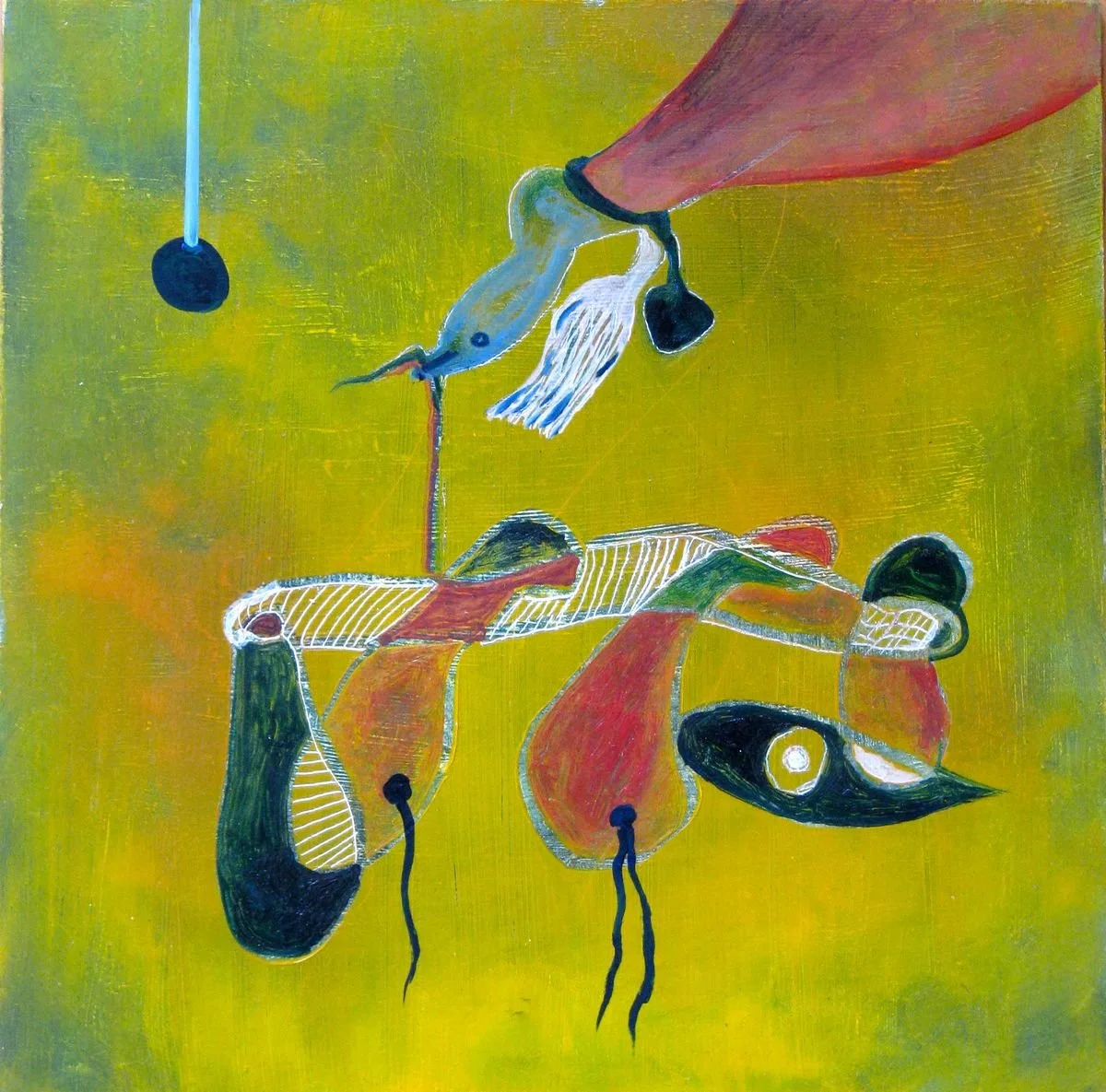
“Scale of Justice and the Invisible Hand,” 2013
Lectures
What is Post Orientalism?
Lecture at Hamad Bin Khalifa University, 2023
Delivering the Dean's Foresight Lecture, Professor Hallaq begins by outlining the problematic epistemic ruptures created by modernity and Orientalism, and how his work aims to critique them. He then sets out his four key premises: saving Orientalism with modifications, re-engineering Orientalism to narrate Islam positively to Western audiences, transforming Orientalism into a "subversive agent" for Western academia, and, most importantly, enabling Muslims to articulate their own history autonomously. Professor Hallaq proposes "epistemic humility" as a core solution, towards an ethical approach to knowledge and a re-imagination of our relationship with nature, emphasizing that true scholarship requires cultivating the self through deliberate practices.
Professor Hallaq introduces the Sharīʿah as a comprehensive ethical and moral framework that historically permeated all aspects of Islamic society, including its social, economic, cultural, and intellectual spheres. Unlike modern legal systems, Sharīʿah intrinsically links facts with values, meaning that every aspect of existence and knowledge is imbued with moral significance. Hallaq emphasizes that the Quran itself establishes this moral cosmology, where human actions have universal consequences and ethical considerations are foundational to creation and human conduct. He differentiates his approach from traditional academic "criticism" by advocating for "critique," which fundamentally questions the premises of a system, a method he applies to modern society's fragmented and ethics-divorced structure. Ultimately, he posits that the Sharīʿah, with its emphasis on concepts like epistemoral connections and the protection of the marginalized, provided an ethical benchmark that is absent in the modern world.
Unlike modern systems which tend to instrumentalize human beings for material and political ends, Sharīʿah places the human at the center as the "repository of all value." Professor Hallaq explains that Sharīʿah, as a central domain of Islamic culture, was fundamentally concerned with the well-being of the human and the stability of the community.
He critiques modern society's atomization of individuals and environmental degradation, linking them to capitalist, technical, and bureaucratic interests, while highlighting Sharīʿah’s focus on beneficial knowledge and ethical responsibility towards God's creation.
Part 3:
The Rule of Law
In the third and final lecture, Professor Hallaq unveils the main constitutional features of Islamic governance from a structural historical perspective. He argues that Islamic political governance, across centuries, possessed a robust rule of law, more so than modern liberal democracies, with a more clearly delineated separation of powers. He discusses how the legislative power in Islam was more authoritative than its modern counterpart, primarily due to the collective juristic tradition and the theological tenet that "no man shall rule man."
Lecture Series: What is Shari’a?
Part 1:
The Ethical Structure
Part 2:
The Primacy of the Human
A Critique of Modernity
The State and its Forms of Knowledge
This is a six-part lecture series. To access the full playlist, please click on the button below.
This six-part lecture series offers a comprehensive critique of modernity and its forms of knowledge, examining the modern state's distinctive mechanisms of power and proposing alternative frameworks grounded in Islamic intellectual traditions.
The series begins by analyzing the modern state's fundamental character—its amorality, self-perpetuation, and monopoly on legislative authority. Through institutions like public health and social agencies, the state exercises disciplinary power that shapes populations into "state persons" serving economic imperatives. This process, emerging in 17th-century Europe, has created conceptual frameworks so pervasive that describing pre-modern, non-European realities without imposing modern biases requires entirely new language and analytical tools.
The lectures contrast this modern apparatus with traditional Islamic governance, which maintained clear boundaries between executive and legislative authority while allowing institutions like education and health systems to operate autonomously. Where modern states deploy "biopower"—surveillance, policing, economic disciplining—to produce productive citizens for capitalism, the Islamic tradition emphasized "technologies of the self": intentional, repetitive practices like prayer designed for ethical cultivation and detachment from worldly appetites.
The series extends this critique to academia itself, particularly Orientalism and Islamic studies, arguing that scholarship's complicity in colonialism and Islamophobia stems from privileging "sovereign knowledge" that prioritizes objective truth over ethical responsibility.
Examining contemporary Arab thought's engagement with modernity, the lectures challenge attempts to separate modernity's "spirit" from its "application." Capitalism and other supposed misapplications are not accidental outcomes but structurally embedded within modernity's foundational principles—spirit and application prove inseparable.
The series concludes by proposing the "new human" as remedy: characterized by categorical absence of sovereignty, anti-materialism, rejection of capitalism as metaphysics, and recognition of the world's interconnected unity and intrinsic value. This vision emphasizes the dialectical unity of theory and praxis as ethically formative process, grounded in trusteeship and stewardship, seeking to "re-enchant" a world stripped of transcendence by secular modernity.
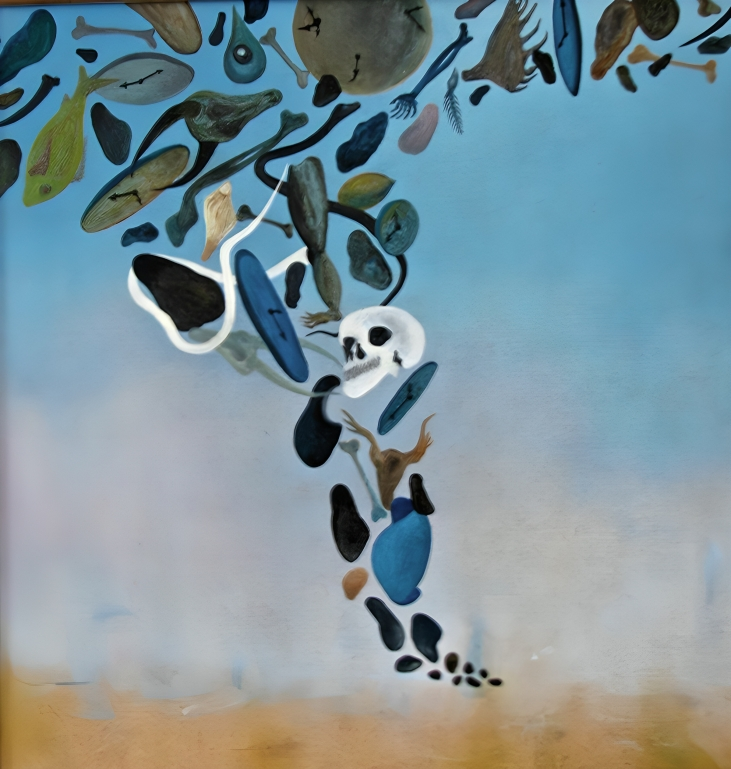
“Modern Resurrection,” 2012
English Interviews
Interview with Afkira, April 2024
HBKU, February 2023
Finjan (English Subtitles), 2024
Debates
Arabic Interviews
Al Jazeera, 2022
Thaqafiyyah, 2025
Discussing The Impossible State
Print Interviews
Select Articles in Turkish: Published in Sabah Ülkesi
OCTOBER 2018
In the Media
Watch Imam Tom Facchine discuss Professor Hallaq’s book, The Impossible State, in a series of five videos on @BloggingTheology.
Imam Tom Facchine discusses Professor Hallaq’s book, Restating Orientalism.
Imam Tom Facchine discusses Professor Hallaq’s works in Indonesia.